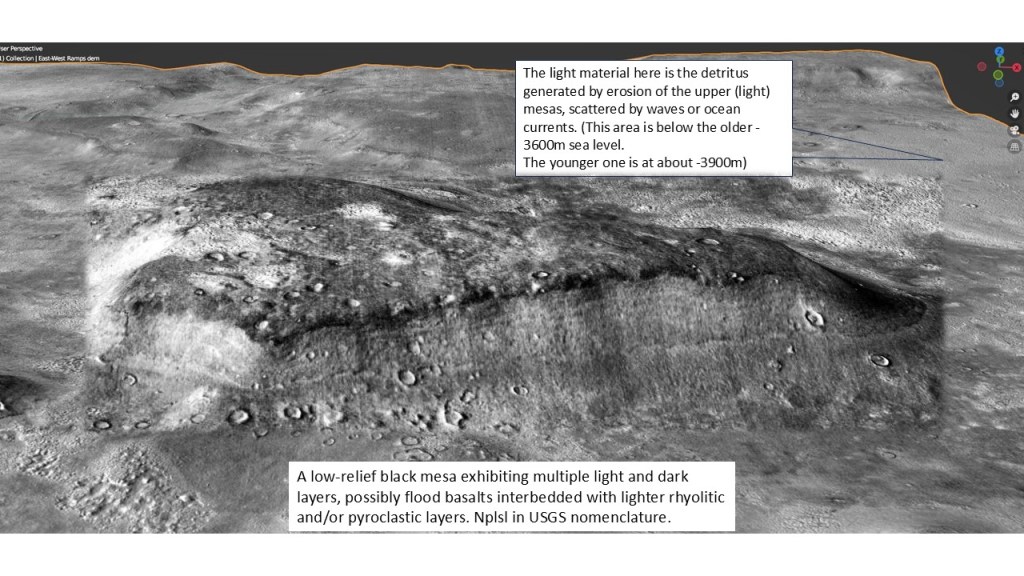
A brief review of the plateau rocks, mensae and ramps is in order. They are divided into two units: Noachian Plateau Smooth Upper and Noachian Plateau Smooth Lower distinguished by their reflectivity, i.e. light upper (felsic) and dark lower (mafic). As discussed in the previous section, the light upper unit, where eroded, reveals the stratigraphically lower dark unit.

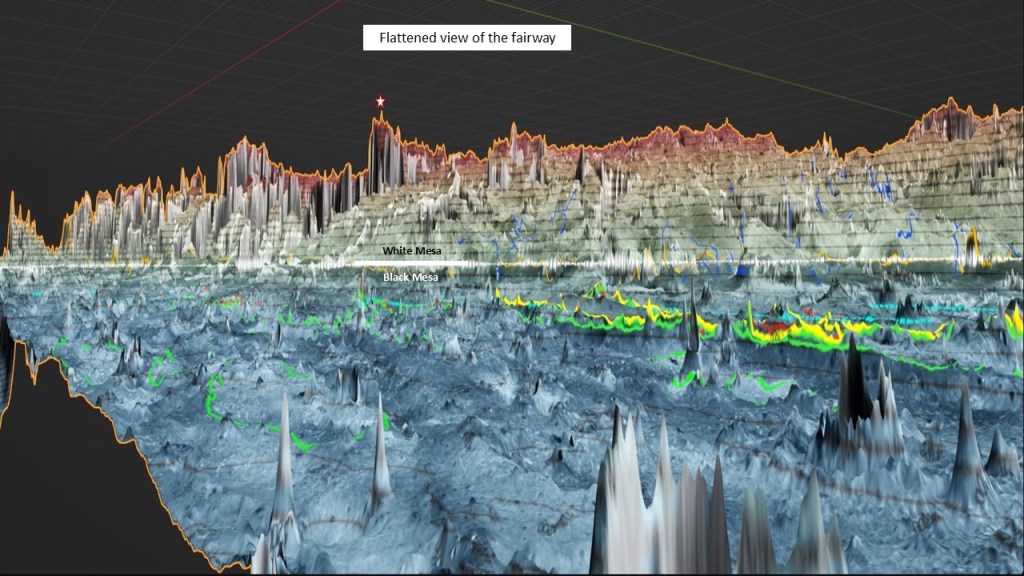
Erosion of the upper mesas gives rise to lobate debris aprons onshore, and widespread, light detrital material in the nearshore ocean.
Analog from a Large Igneous Province on Earth:
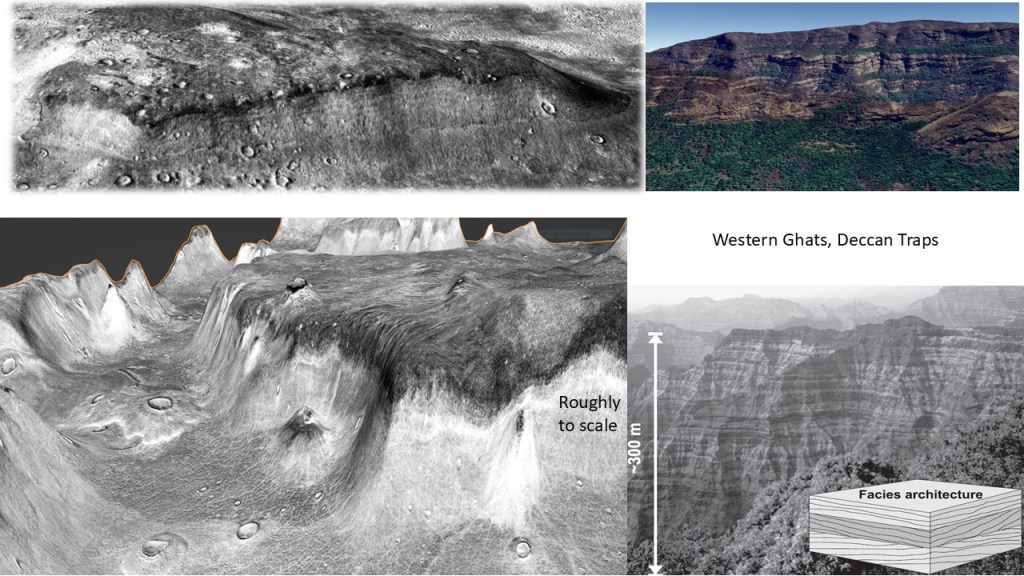
Offshore, the tops of the truncated mesas are generally composed of dark material, thought to be flood basalts, which are quite resistant to erosion.
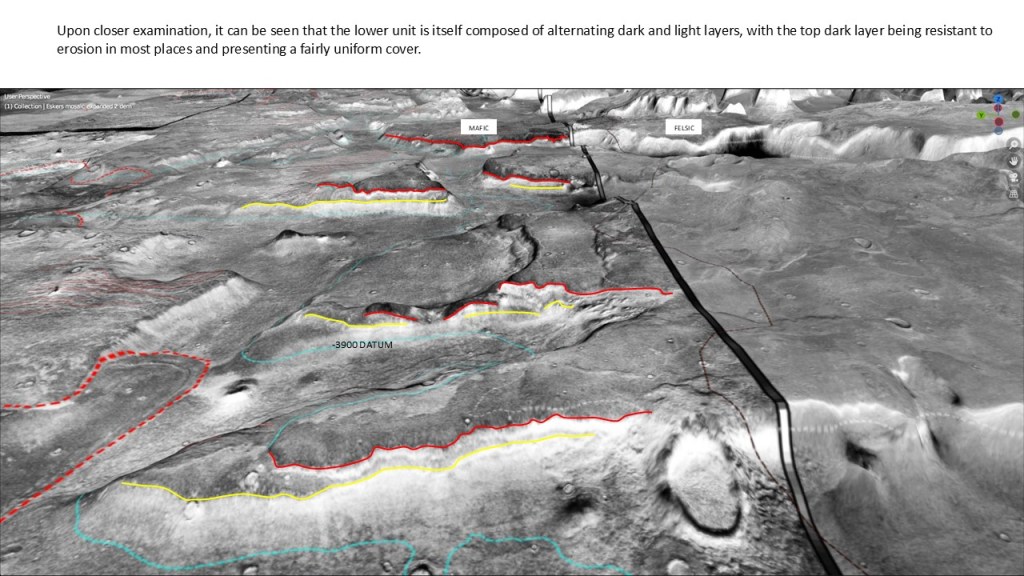
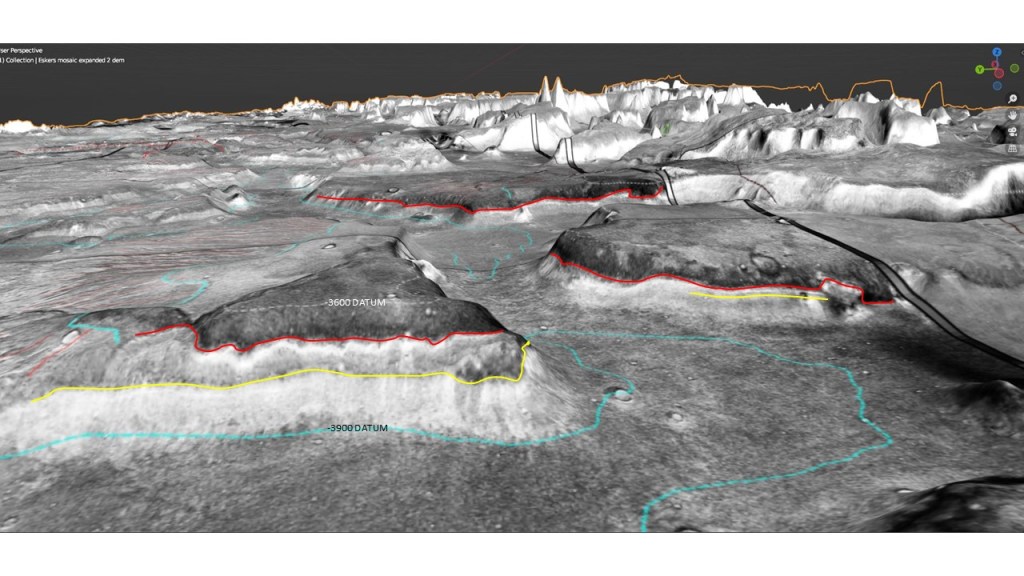
The mesas shown below are roughly 50m below interpreted wave base:
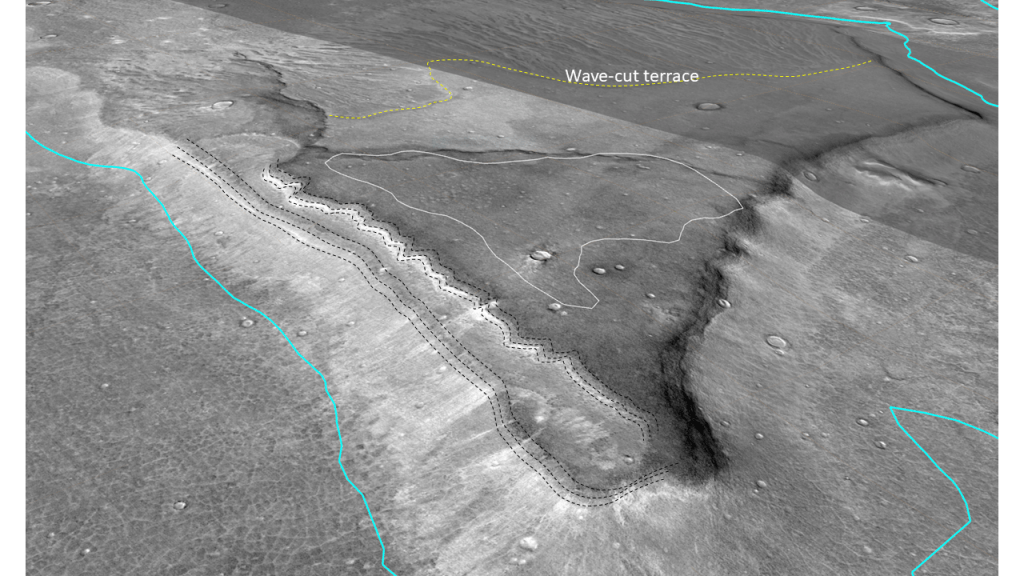
Here, the interpreted shoreline is shown in yellow, with the erosional rilles going to the top of the picture:
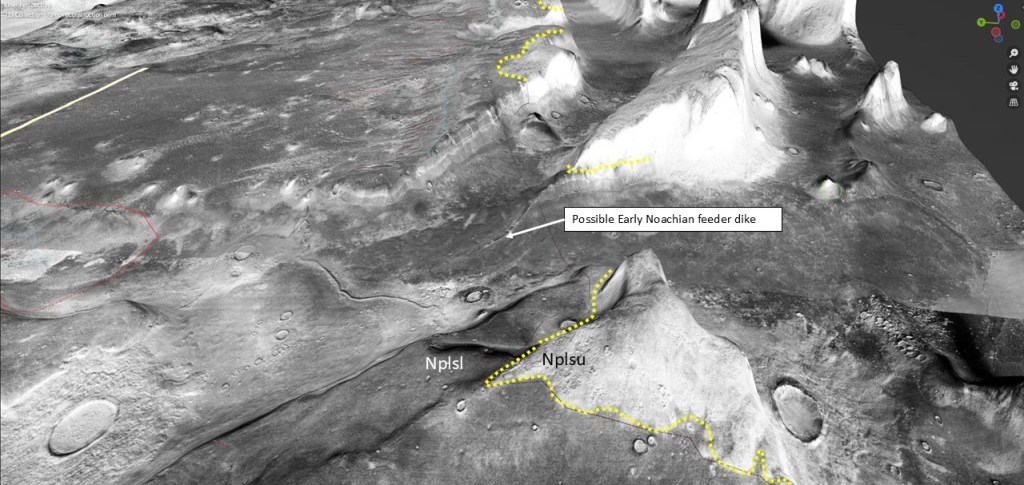
The yellow line demarcates the contact between upper and lower mesa units, and a possible feeder dike for the lower basalt is indicated:
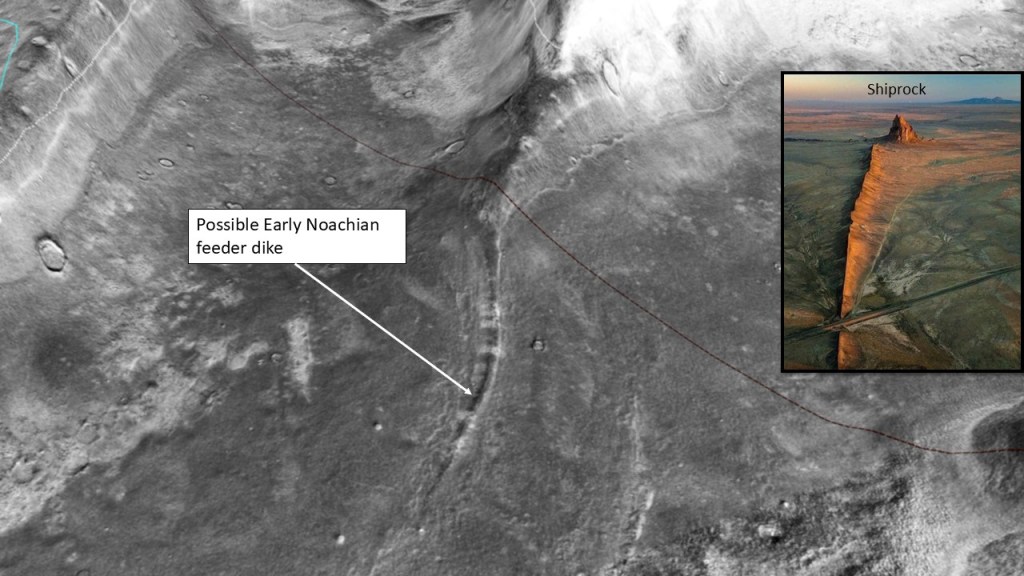
A closeup of the above dike:
In the next section we’ll see what happens when the basalt caprock is eroded.
 Mars Geomorphology